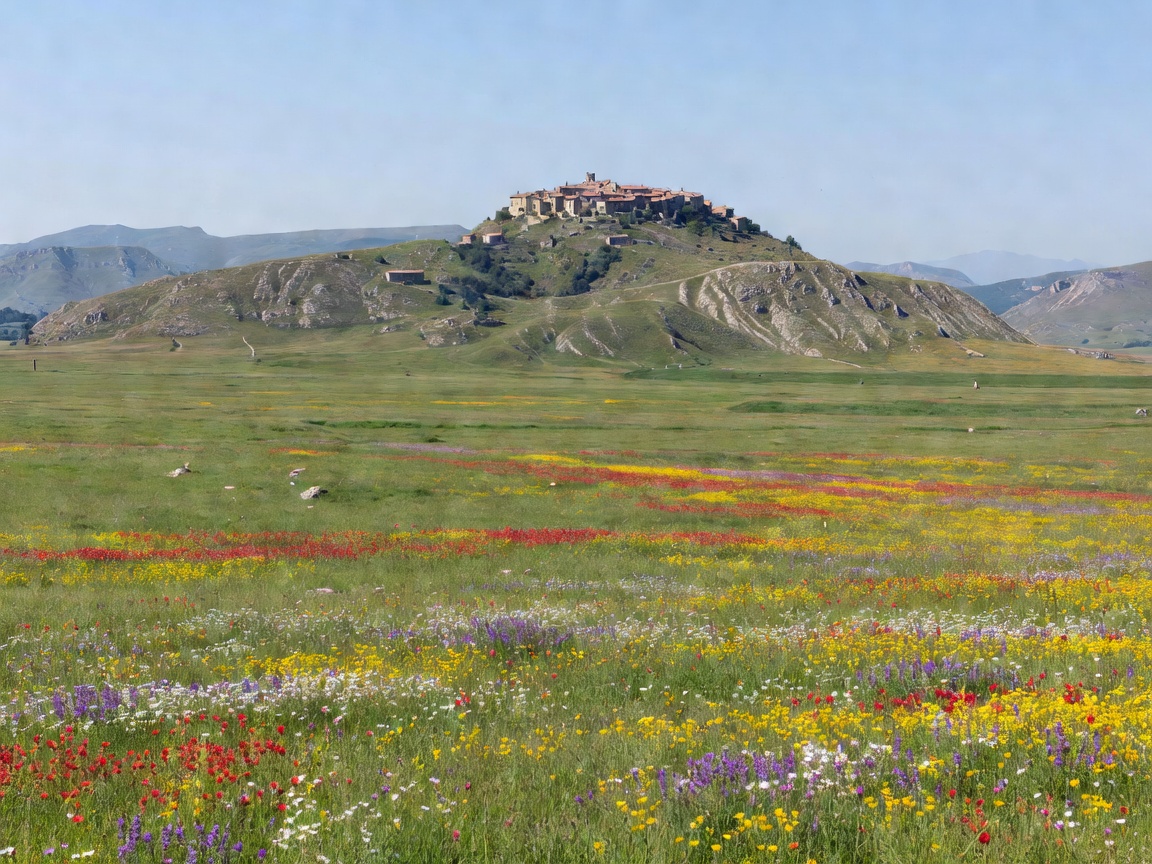
A Landscape of Geological Scale
Situated in the heart of the Monti Sibillini National Park beneath the rocky bulk of Mount Vettore (2,476 meters), Castelluccio di Norcia is one of the highest permanently occupied settlements in the central Apennines. The village stands upon a limestone promontory that looks down across three expansive flat karst basins: Piano Grande, Piano Piccolo, and Piano dell'Inghiottitoio.
For centuries, this austere high-altitude microclimate prevented traditional agricultural monoculture, forcing the local community to develop specialized pastoralism and the cultivation of an exceptionally hardy, thin-skinned legume: the famed Lenticchia di Castelluccio IGP. The annual early-summer flowering period (known locally as La Fiorita) transforms the plain into an undulating mosaic of wild poppies, cornflowers, and mustard blooms.
Seismic History and Rebirth
In October 2016, a sequence of powerful earthquakes struck the central Apennines, causing catastrophic structural collapse throughout the historic core of Castelluccio. The church of Santa Maria Assunta and dozens of centuries-old stone dwellings were largely ruined.
Despite unprecedented destruction and temporary evacuation, the farmers and shepherds refused to abandon their generational fields. With meticulous seismic stabilization projects and modern modular community facilities, the village has systematically reopened. Visiting Castelluccio today offers not merely scenery, but an immediate encounter with human dedication to cultural continuity.
Highland Gastronomy & Artisanal Norcineria
Owing to its proximity to Norcia—the ancestral home of Italian cured meats—the cuisine of Castelluccio is earthy, nourishing, and protein-rich:
- Zuppa di Lenticchie: Delicately cooked Castelluccio lentils simmered with garlic, celery branch, and local cured guanciale. Because their skin is exceptionally tender, they require no soaking prior to cooking.
- Pecorino dei Sibillini: Firm ewe’s milk cheese produced from sheep grazing on highland thyme and alpine grasses, aged in natural caves.
- Salumi di Norcia: Prosciutto di Norcia IGP, seasoned wild boar sausages (salsicce di cinghiale), and cured pork lardo infused with rosemary.
Why Visit Castelluccio
- Pristine air and unparalleled open Apennine landscapes.
- Exceptional hiking, cycling, and hang-gliding launch conditions.
- Direct contribution to local reconstruction and agricultural preservation.
Practical Travel Notes
- Significant ongoing reconstruction works within parts of the upper village.
- Extreme weather shifts; winter snow often closes mountain passes.
- High visitor traffic during late-June bloom weekends requires advance shuttle booking.
Environmental Stewardship on the High Plain
When traversing the Piano Grande, travelers must remain strictly on paved roadways and marked trails. Walking or driving into cultivated lentil fields severely damages fragile crop seedlings and native wildflowers. Responsible travelers patronize the temporary village cooperativa, where authentic IGP-certified lentils and artisanal cheeses directly benefit the cooperative farming households.