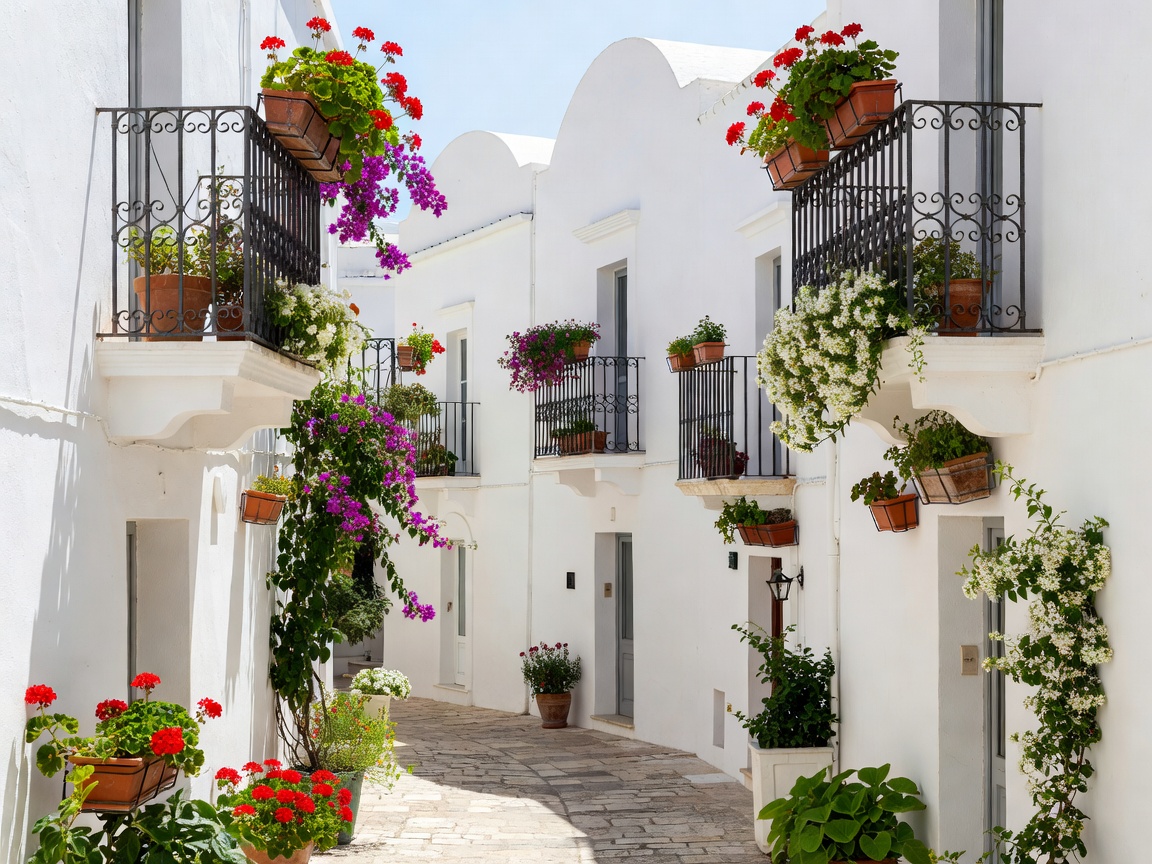
The Concentric Architecture of the "Round Place"
The name Locorotondo originates directly from the Latin locus rotundus, describing the circular layout of the historic nucleus perched above the Valle d'Itria. Unlike the conical limestone trulli scattered across the neighboring fields of Alberobello, the domestic architecture of Locorotondo is defined by distinctive tall townhouses topped by cummerse—steeply pitched roofs tiled with flat limestone slabs known as chiancarelle.
The continuous application of white lime wash reflects southern Mediterranean heat while giving the entire settlement an luminous glow. Residents take immense pride in adorning limestone doorframes with vibrant pink and red geraniums, creating an enchanting contrast against the pale stone.
Historic Churches and Scenic Overlooks
At the town's perimeter, the panoramic lungomare promenade (Via Nardelli) looks out over the valley floor, an agricultural tapestry composed of dry-stone walls (muretti a secco), ancient olive trees, and isolated rural trulli dwellings.
Inside the quiet center stands the neoclassical Church of San Giorgio Martire, constructed between 1790 and 1825 on the site of two prior medieval churches. Nearby, the Romanesque-Gothic Church of the Madonna della Greca dates back to the 12th century, housing a delicately sculpted stone polyptych and intricate bas-reliefs displaying medieval heraldry and pastoral iconography.
Apulian Country Flavors and Crisp White Wines
While southern Puglia is widely famous for robust reds, Locorotondo is the epicenter of one of the region's premier white wine appellations:
- Locorotondo DOC Wine: A crisp, dry, and delicate white wine blended primarily from Verdeca and Bianco d'Alessano grapes, offering subtle green apple and mineral undertones.
- Gnummarieddi: Skewered rolls of lamb liver and sweetbreads wrapped in intestines and seasoned with wild parsley and garlic, char-grilled over olive wood.
- Orecchiette alle Cime di Rapa: Fresh ear-shaped semolina pasta sautéed with tender turnip greens, anchovy fillets, garlic, and a pinch of crushed peperoncino.
Highlights of Locorotondo
- Less commercialized and crowded than nearby Alberobello.
- Immaculate pedestrian cleanliness and flower-adorned corridors.
- Central location for exploring the broader Valle d’Itria countryside.
Visitor Observations
- High glare in mid-summer necessitates quality UV eye protection.
- Strict enforcement of afternoon riposo; shops close from 13:30 to 17:00.
- Regional train services require occasional bus transfers on Sundays.
Sustainable Tourism in the Valle d’Itria
Because the whitewashed finish on the masonry requires frequent restoration by local craftsmen, travelers are asked to treat exterior facades with care. By visiting local enotecas and dining in family-operated cantinas in the lower courtyards, visitors directly fund the preservation of this rare Mediterranean urban gem.