From Military Bulwark to Viticultural Oasis
First documented in early medieval records as Monteficalle (referencing the wild fig trees that once lined the hilltop), the fortress was established as a strategic stronghold defending the borders between Florence and Siena. During the 13th and 14th centuries, defensive engineers constructed an elliptical perimeter ring wall flanked by defensive lookout towers, which were later adapted into residential stone dwellings.
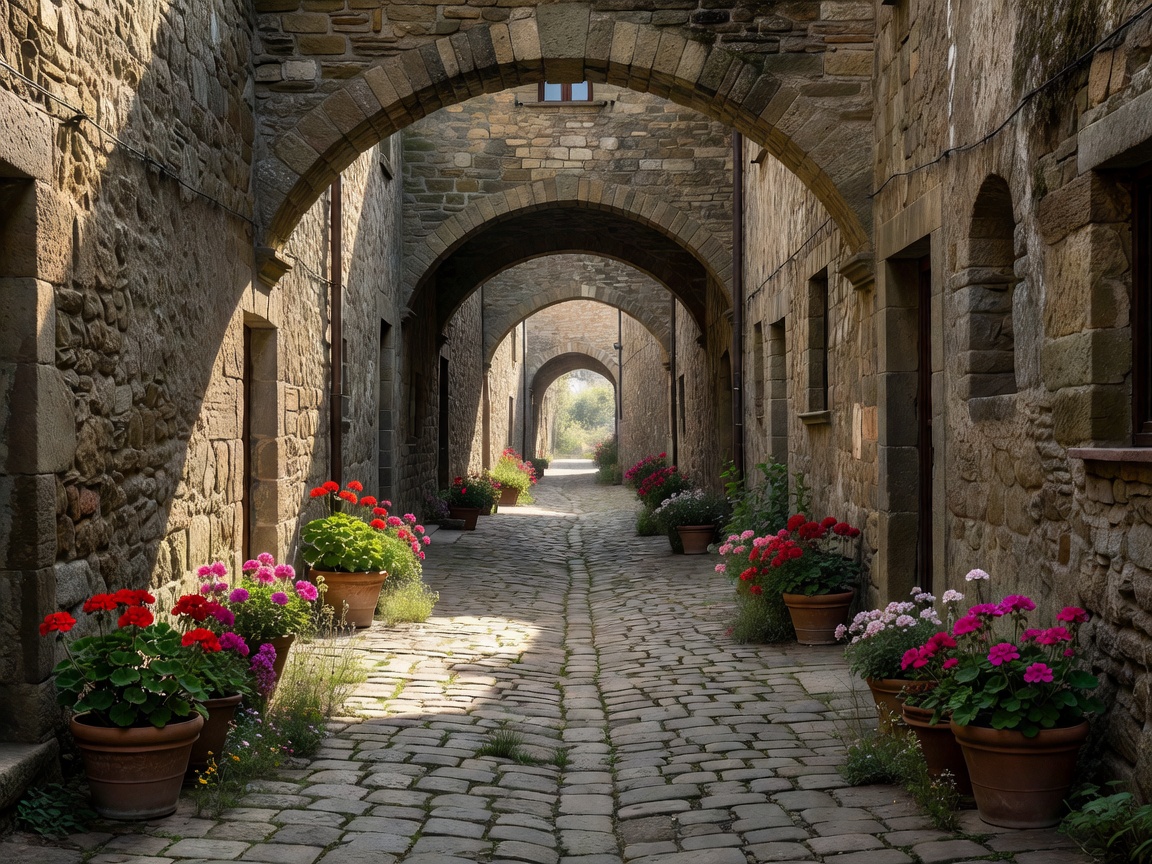
Unlike larger Tuscan centers that were altered by industrial expansions and heavy vehicle infrastructure, Montefioralle's physical layout was dictated permanently by its tight rocky perimeter. A walk through its central artery reveals Gothic doorways, original stone machicolations, and decorative coats of arms honoring Florentine nobility, including the heraldic wasp insignia of the Vespucci family. Local historical tradition maintains that the navigator Amerigo Vespucci once lived within these fortress walls.
Architectural Highlights & The Church of Santo Stefano
At the highest point of the village sits the Church of Santo Stefano, rebuilt in the 17th and 18th centuries over earlier Romanesque foundations. Inside rests a revered late 13th-century panel depicting the Madonna and Child by the Master of Montefioralle, illustrating the sophisticated sacred art that penetrated modest rural hill settlements during the early Italian Renaissance.
Encircling the church is an intact circular stone street paved in broad river cobblestones. Small arched underpasses connect back courtyards with panoramic openings looking south across the Greve Valley, where steep terraced vineyards yield grapes for the Chianti Classico DOCG appellation.
Gastronomic Heritage
Dining in Montefioralle emphasizes the hearty, unpretentious culinary staples of the Florentine countryside:
- Bistecca alla Fiorentina: Thick-cut Chianina beef grilled over seasoned oak embers and finished simply with coarse salt and local olive oil.
- Ribollita: Twice-cooked rustic vegetable soup made with stale Tuscan unsalted bread, cavolo nero (lacinato kale), and cannellini beans.
- Chianti Classico Riserva: Sangiovese-dominant red wine characterized by sour cherry notes, balanced acidity, and firm tannins softened by aging in oak casks.
Highlights of Montefioralle
- Walking distance (approximately 2 kilometers uphill) from Greve in Chianti.
- Exceptional preservation of feudal stone circular ramparts.
- Intimate boutique wine estates situated immediately along the boundary.
Visiting Observations
- Very narrow perimeter road with strictly restricted resident vehicle permits.
- Limited number of tables at local trattorias; advance booking is essential.
- Uneven historical flagstones require sturdy, slip-resistant footwear.
Preserving the Silence of the Borgo
Because Montefioralle is predominantly an active residential village rather than an open-air museum, visitors are encouraged to respect the peaceful pace of daily life. Exploring the alleys in the late afternoon allows travelers to experience the village bathed in warm amber sunset, casting long shadows across the centuries-old sandstone masonry.